
Introduction
Touchless faucets and automatic soap dispensers have moved from luxury upgrades to the minimum required elements in many modern restroom projects. Going beyond hygiene into accessibility, sustainability, and user flow, here is a holistic design guide toward integrating sensor-driven fixtures into restroom environments with performance and usability in the long run.
Why Touchless Matters
Touchless faucets and soap dispensers reduce cross-contamination, enhance accessibility, and provide an integrated user interface. In the post-pandemic environment, architectural planners are finding themselves increasingly specifying sensor fixtures in restrooms as standard performance infrastructure rather than as ” bells and whistles.
Key Design Considerations
Spatial Layout
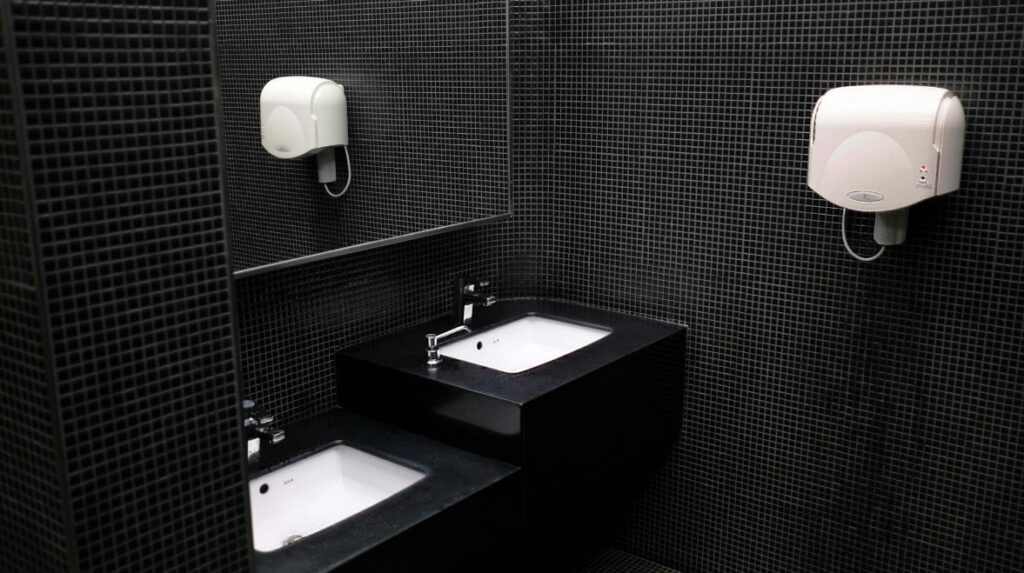
Make sure these are cleared for ADA compliance, traffic flow, and to eliminate bottlenecks. The positioning of faucets and dispensers at multi-user wash stations needs to comply with human reach and follow human movement patterns.
Aesthetic Integration
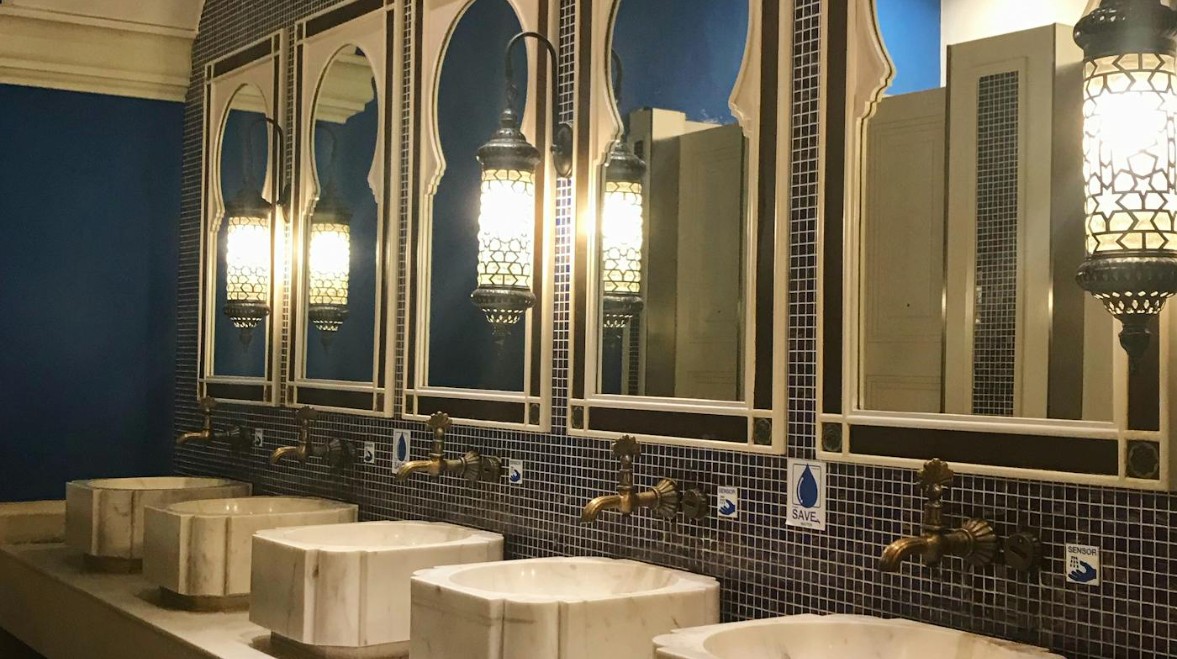
Fixtures should complement the interior palette and finish schedule. Coordinating finishes (matte black, stainless, brushed brass) across faucets and dispensers creates continuity and strengthens the restroom design language.
Hygiene & Safety
Anti-scald valves, antimicrobial surfaces, and rapid sensor response improve safety and sanitation. Soap dispensers must be placed to avoid dripping patterns that create slip hazards near wash zones.
Sustainability
The use of the flow-restricted faucet, foam soap dispenser cartridges, and refillable multi-feed reservoirs promotes water efficiency. This also helps to ensure compliance with the LEED and WELL systems for the healthy and sustainable building.
Technology Integration
Smart restroom designs are increasingly hooking up faucets and dispensers to the BMS for telemetry on usage counts, soap levels, and battery health.
This makes it possible for there to be connected fixtures for predictive maintenance, cleaning schedules, and resource monitoring. The models for IOT must be made with plans for security within the networks and permissions.
Design for Scale
Airports, malls, stadiums, or large campuses require higher throughput restroom designs. The designer must specify vandal-resistant components, central soap storage compartments, and hydraulic/electrical designs that can withstand hundreds of users per hour.
Spec Checklist
- Activation distance and sensor response time
- Flow rates and soap output per dispense
- Body materials, finishes, and vandal resistance
- Compliance: ADA, WaterSense, LEED/WELL
- Maintenance model: refill cycles, parts availability, SLAs
- Integration: BMS/IoT telemetry and data security planning
Future Directions
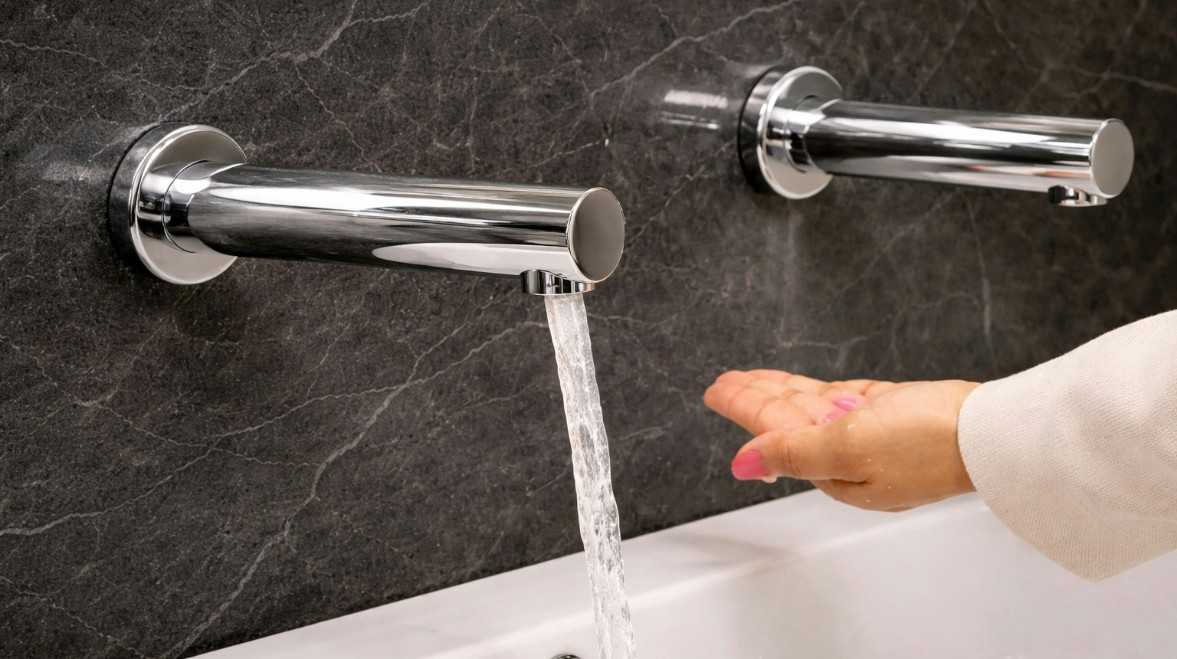
Advancements in sensor accuracy, hydro-power energy harvesting, and antimicrobial materials will continue to reshape restroom design. As the future unfolds, it’s possible that architects will take advantage of unified fixture systems—those at which faucets, soap, and dryers are combined into single stations—that reduce clutter, ease maintenance, and streamline user flow.
Conclusion
The inclusion of touchless faucets and soap dispensers in restrooms can be considered more than just a sanitary issue; it must be considered a systems-level requirement. When operational considerations are optimized, it can make touchless technology a sustainable investment and not just a temporary improvement.