
Arcicther: Bridging History and Innovation
From the timeless balance of Greek columns to the bold innovation of modernism, architecture has always reflected human progress. At Arcicther, we honor this legacy by blending classical theory, cultural memory, and contemporary vision. Our designs carry the weight of history yet look firmly toward the future—where sustainability, beauty, and functionality converge. Arcicther is not just about creating buildings; it is about shaping experiences, preserving heritage, and reimagining what spaces can mean for generations to come.
Design Theory & History: Tracing the Evolution of Architectural Thought
Architecture is more than the construction of walls and roofs; it is the material expression of culture, philosophy, and human ambition. Every era in history has asked the same question in different ways: What should buildings mean, and how should they serve society? Design theory—the framework of ideas that guides architects—has evolved alongside history itself. From ancient civilizations to digital parametric design, the story of architecture is a dialogue between tradition, innovation, and human need.
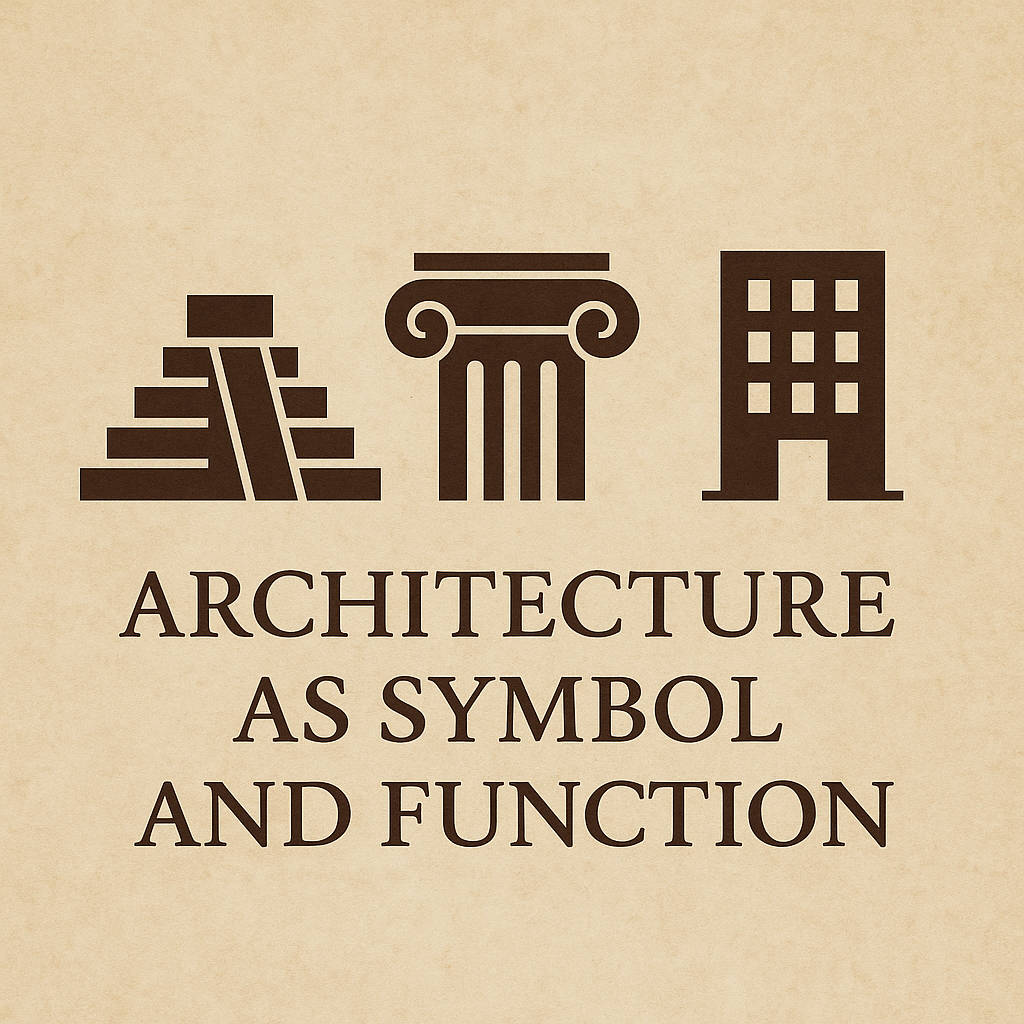
Ancient Foundations: Architecture as Symbol and Function
The earliest architectural theories were not written treatises but embodied practices. In Mesopotamia, ziggurats rose as spiritual stairways to the heavens, their massive stepped forms symbolizing power and divine connection. In Egypt, the pyramids represented eternity, constructed with geometric precision to align with celestial patterns.
Greek architecture marked a turning point, with explicit theories about proportion and beauty. The Doric, Ionic, and Corinthian orders embodied mathematical harmony, reflecting the Greek belief that architecture should express balance and universal order. Vitruvius, in his influential treatise De Architectura (1st century BCE), defined architecture through three principles: firmitas (strength), utilitas (function), and venustas (beauty). These ideas became the cornerstone of design theory for centuries.
The Middle Ages: Faith and Community
After Rome’s decline, architecture in Europe became primarily an expression of faith. The soaring vaults of Gothic cathedrals were not merely engineering marvels but theological statements—light and height as symbols of divine presence. The theory of proportion was applied not only to physical forms but to spiritual meaning, with geometry seen as a sacred language.
Meanwhile, Islamic architecture flourished across the Middle East, North Africa, and Spain. Intricate arabesques, courtyards, and muqarnas ceilings reflected a philosophy of infinite repetition and unity. Here, design theory emphasized the blending of art, spirituality, and daily life.
The Renaissance: Rebirth of Classical Ideals
The Renaissance brought a revival of classical ideas, filtered through humanism. Architects like Filippo Brunelleschi and Leon Battista Alberti reintroduced mathematical proportion, perspective, and symmetry into design. Alberti’s De Re Aedificatoria (1452) expanded on Vitruvian principles, arguing that beauty lay in harmony, proportion, and order.
This period also elevated the status of the architect from master builder to intellectual designer. Drawings, perspective studies, and theoretical writings became integral to the profession. Architecture was no longer only about shelter—it was about representing human dignity, knowledge, and power.
The Enlightenment and Neoclassicism: Rationalism and Order
The Enlightenment introduced rationalism into architectural theory. Thinkers like Marc-Antoine Laugier promoted the idea of the “primitive hut” as the origin of architecture—arguing that all design should return to natural simplicity and logic.
Neoclassicism followed, emphasizing clarity, restraint, and moral seriousness. Buildings such as the Pantheon in Paris symbolized reason, civic virtue, and permanence. Design theory at this time was deeply linked with politics and philosophy, as architecture was used to express ideals of democracy, order, and rational progress.
The Industrial Age: Function, Materials, and Modernism
The 19th century brought new challenges: rapid urbanization, industrial production, and new materials like iron, steel, and glass. Design theory shifted toward functionality and efficiency. The Crystal Palace (1851) by Joseph Paxton embodied this change—prefabricated glass and iron modules created a vast space unlike anything in antiquity.
The 20th century saw the rise of modernism, which rejected ornament and embraced the dictum “form follows function.” Architects like Le Corbusier promoted buildings as “machines for living,” while the Bauhaus School merged art, craft, and industry into a unified theory of design. Minimalism, rationalism, and universalism defined the modernist ethos.
Postmodernism: Questioning the Narrative
By the mid-20th century, strict modernist doctrines faced backlash. Critics argued that universal functionalism neglected culture, context, and human experience. Postmodernism emerged as a reaction, celebrating pluralism, symbolism, and even playfulness. Architects like Robert Venturi and Michael Graves reintroduced ornament, historical references, and irony into design.
Design theory during this era shifted from universal rules to contextual storytelling—an acknowledgment that buildings should respond to history, culture, and human diversity.
Recurring Themes in Design Theory
Throughout history, several recurring questions have shaped architectural thought:
- Form vs. Function: Should buildings prioritize beauty or utility—or both?
- Tradition vs. Innovation: How much should design draw from the past versus embrace the future?
- Individual vs. Community: Is architecture an expression of personal vision or collective need?
- Nature vs. Technology: Should buildings harmonize with the natural environment or boldly assert technological progress?
Each era has answered differently, yet these debates remain alive today.

Designing With Climate in Mind
Sustainable architecture has become one of the defining concerns of the present era. Energy use, material sourcing, daylight, ventilation, and water efficiency now shape early design decisions instead of being treated as later additions.
In this context, theory returns to an older question with new urgency: how should buildings serve life over time? The answer increasingly points toward spaces that reduce waste, support wellbeing, and work in harmony with their environment.

Adaptive Reuse and Cultural Continuity
Contemporary practice also values what already exists. Rather than replacing older structures, architects often adapt them for new uses. This approach preserves memory while allowing spaces to meet present needs.
Adaptive reuse reflects a mature design philosophy: progress does not always require erasure. In many cases, the strongest architectural statement comes from respecting the past and building thoughtfully within it.

Digital Tools, Human-Centered Results
Parametric modeling, simulation tools, and digital fabrication have transformed the design process. Architects can now test performance, visualize complex geometries, and refine ideas with a level of precision that earlier generations could only imagine.
Yet the deeper purpose remains human. Technology is most meaningful when it improves clarity, comfort, accessibility, and the experience of space for the people who use it every day.
Conclusion: The Living Dialogue of Design
Design theory and history are not fixed chapters but an ongoing dialogue. The clay bricks of Mesopotamia, the arches of Rome, the domes of the Renaissance, the steel frames of modernism, and the algorithmic curves of today’s parametric designs are all part of the same story: humanity’s attempt to shape space in a way that reflects values, aspirations, and identities.
Architecture, at its core, is not just about constructing buildings. It is about creating meaning. And design theory—whether in Vitruvius’ timeless triad, Alberti’s Renaissance humanism, or today’s sustainable innovations—remains the compass that guides how we imagine and build our world.
The Future of Design Theory
As architecture moves forward, theory is becoming more inclusive and more practical at the same time. It is no longer limited to abstract ideals of beauty or permanence. It now addresses environmental impact, local identity, flexible living, and the social role of the built environment.
This does not replace the lessons of history. Instead, it extends them. The principles of proportion, meaning, and purpose still matter—but they are now joined by responsibility, adaptability, and care for context.
- History remains essential because it gives architecture depth and continuity.
- Innovation matters because new challenges require new responses.
- Context matters because spaces should reflect the people and places they serve.
- Longevity matters because good design should remain useful beyond a single moment.
In that sense, architecture continues to be a living discipline—one that learns from the past while designing for a more resilient future.
Reference Links
The following resources support related product categories, installation guidance, and specification references connected to this page.