
Safety, Privacy and Psychological Comfort in Stadium Restrooms
Restrooms temporarily place people in a more vulnerable condition: separated from companions, handling belongings, caring for children, transferring from mobility equipment or simply seeking privacy in a crowded public building. Architecture can either reduce that vulnerability or intensify it.
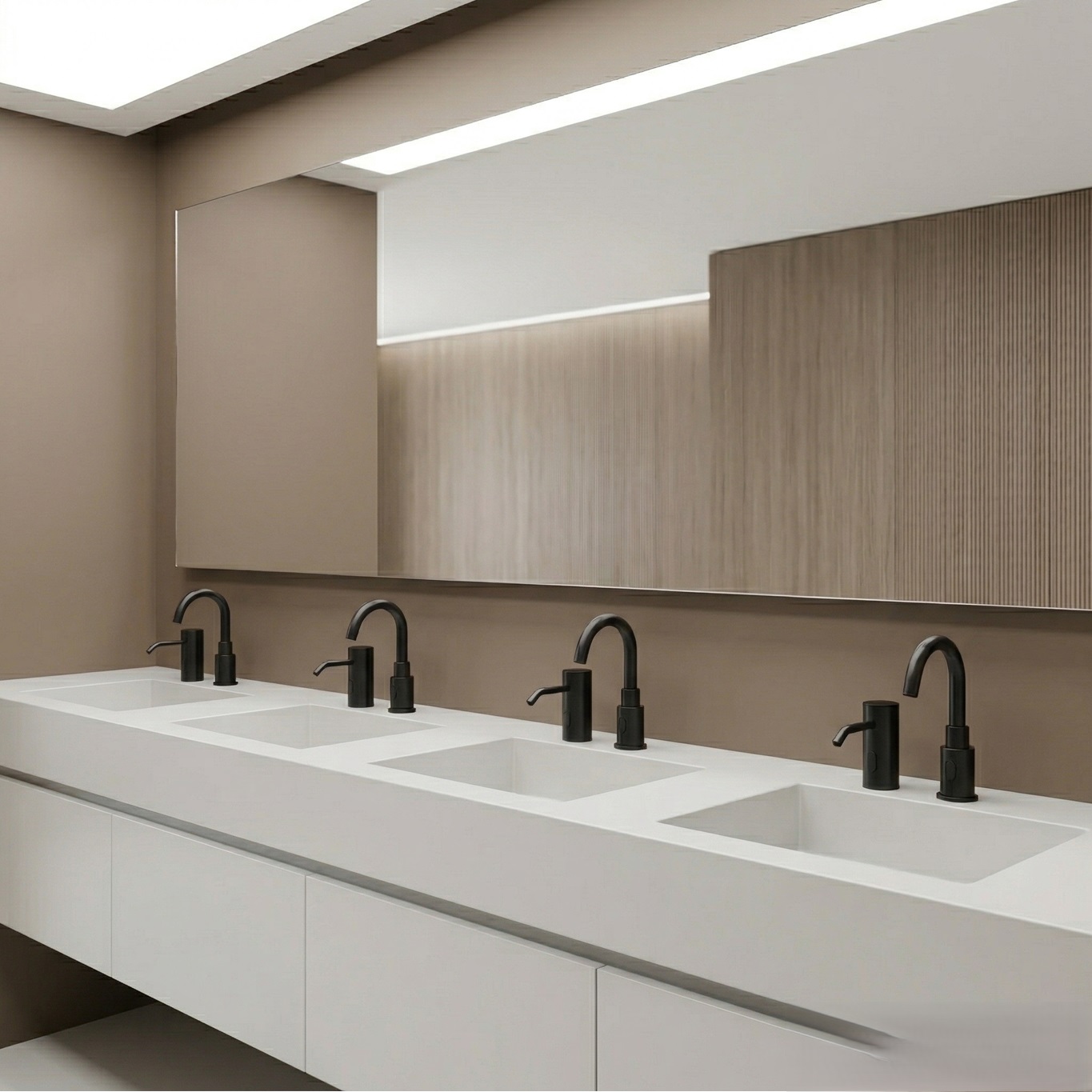
Fear and Personal Safety
Poorly lit approaches, blind corners, hidden corridors and isolated facilities can increase anxiety about confrontation, harassment, theft or separation from companions.
Read More
The goal is not intrusive surveillance. Clear approaches, visible entrances, understandable circulation, predictable exits, appropriate lighting and nearby staff presence can improve perceived safety without compromising personal privacy.
Privacy Is Spatial and Psychological
Large gaps around stall doors, exposed urinals, poorly placed mirrors and direct sightlines from entrances can make users feel watched or unnecessarily exposed.
Read More
Acoustic separation, ventilation, more complete visual screening and reduced forced interpersonal contact can create greater dignity in a setting where strangers are unusually close to private bodily activities.
The Fear of the Other
Public restrooms compress strangers into a space associated with waste, odor, bodily sound, hygiene, illness, menstruation and activities that are normally kept private.
Read More
In a stadium, this discomfort can be amplified by the constant arrival of people from many social groups. Cleanliness, intuitive circulation and effective privacy measures can reduce that tension without pretending it does not exist.
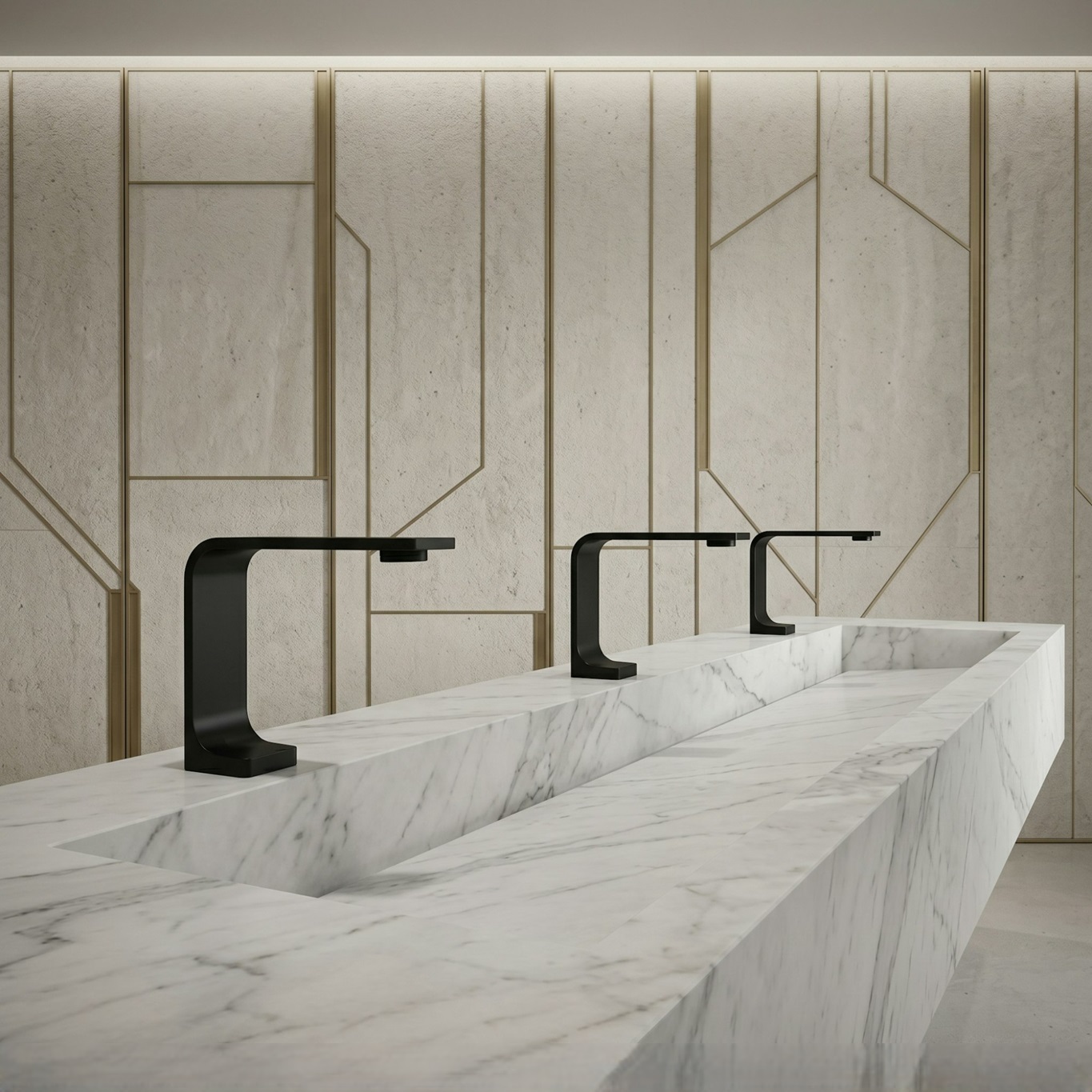

Crowd Anxiety and Loss of Control
Dense queues, pushing, excessive noise, blocked exits and unclear paths can make users feel trapped during a sudden demand surge.
Read More
Circulation therefore contributes directly to emotional comfort. Visitors should be able to understand how to enter, where to wait, how to reach the fixtures and how to leave without uncertainty or unnecessary conflict with incoming traffic.
Cleanliness Communicates Care
Cleanliness is not only a maintenance or infection-control issue. A visibly cared-for restroom communicates that visitors were expected and that the facility is actively managed.
Read More
Overflowing bins, empty soap dispensers, wet floors and broken fixtures communicate neglect. That impression can feel especially significant to visitors who already feel vulnerable or uncomfortable when using crowded public facilities.
Certainty Is a Design Outcome
Visitors want to know whether the restroom is easy to find, safe, available, functional and quick enough to let them return to the event.
Read More
Reducing uncertainty can improve psychological comfort as much as adding a visually premium finish. Clear signage, understandable circulation and visibly maintained fixtures give users confidence before they even begin using the room.
| Design factor | What to evaluate | Why it matters |
|---|---|---|
| Approach | Visible, well-lit and direct access | Reduces anxiety created by hidden corridors and blind corners |
| Privacy | Controlled sightlines and acoustic separation | Reduces exposure, discomfort and embarrassment |
| Circulation | Clear entry, queue and exit logic | Limits crowd compression and directional confusion |
| Cleanliness | Dry, supplied and visibly maintained facilities | Supports trust and reduces restroom avoidance |
| Certainty | Predictable location, availability and function | Reduces hesitation, anxiety and unnecessary delay |
Read More: Restrooms as Psychological Environments
Expanded Context
A mega-venue restroom is simultaneously a plumbing system, a crowd-management system, a hygiene system and a psychological environment.
Evaluating only code requirements, fixture quantities and decorative finishes misses the emotional conditions that determine whether people feel comfortable and confident enough to use the space at all.