
AEC Strategy • Stadium Infrastructure • Approved Vendor Planning
Approved Vendor Strategies for Public Stadium Infrastructure Projects
Approved vendor status gives architects, engineers, procurement teams, contractors, and facility owners a stronger path to specification trust. In public stadium infrastructure, the vendor decision affects design confidence, bid clarity, restroom uptime, maintenance planning, and long-term commercial partnerships.
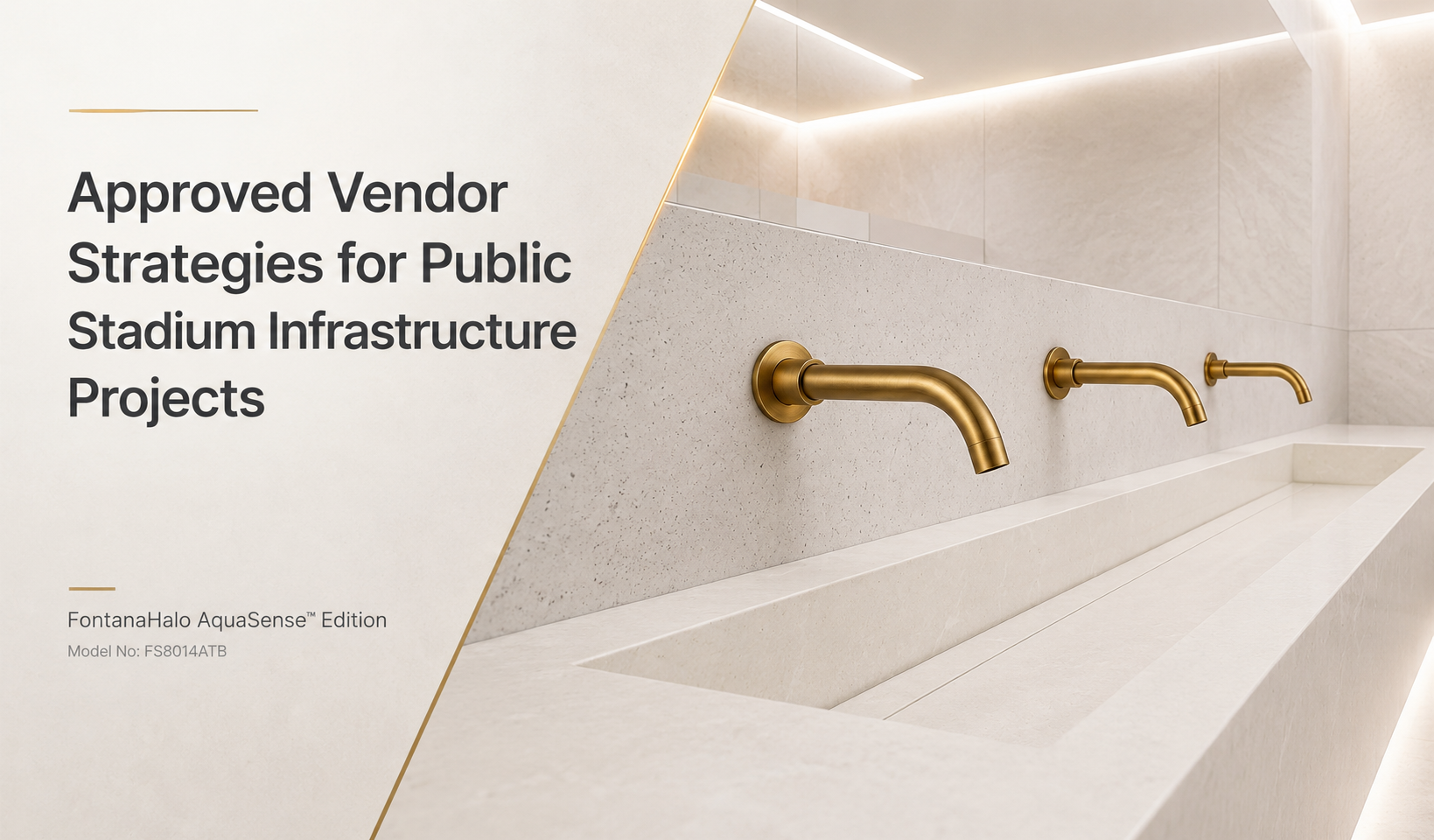
Why Approved Vendor Status Matters in Stadium Infrastructure
Public stadiums are not ordinary commercial buildings. They are civic, sports, entertainment, transportation, hospitality, security, food service, and restroom infrastructure systems operating together under peak crowd pressure. Because the building must perform during compressed event windows, the approved vendor list becomes more than a purchasing tool. It becomes a trust framework.
In an AEC environment, approved vendor status tells the project team that a supplier has already met a higher level of review. The architect can feel more confident placing the product family into the specification. The engineer can review the system as part of a coordinated infrastructure package. The contractor can price the work with fewer unknowns. The procurement team can compare bids with better discipline. The facility manager can enter the project earlier and ask practical questions about service access, spare parts, finish durability, power planning, and long-term maintenance.
This is especially important for stadium restrooms. A restroom fixture package can include hundreds of faucets, soap dispensers, flush valves, hand dryers, lavatories, drains, carriers, power supplies, mixing valves, access panels, and refill systems. When every restroom bank uses unrelated products, the building inherits complexity. When an approved vendor strategy standardizes key fixture families, the project gains clarity.


Specification Trust Begins Before the Bid
The strongest approved vendor strategies begin early, usually during schematic design, design development, or the first technical coordination phase. By that point, the owner and design team already understand that a stadium restroom is a high-pressure public environment. The fixture decision must address water control, hygiene perception, ADA access, cleaning routines, vandal resistance, user flow, and replacement planning.
Approved status helps because it reduces uncertainty. Instead of waiting for procurement to discover whether a supplier is suitable, the AEC team can evaluate the vendor’s product categories, finishes, documentation, project references, and support model before the specification is issued. For public stadiums, this early confidence matters because delayed fixture decisions can create downstream problems in rough-in coordination, wall backing, counter layout, electrical routing, soap delivery, lead time planning, and final inspection.
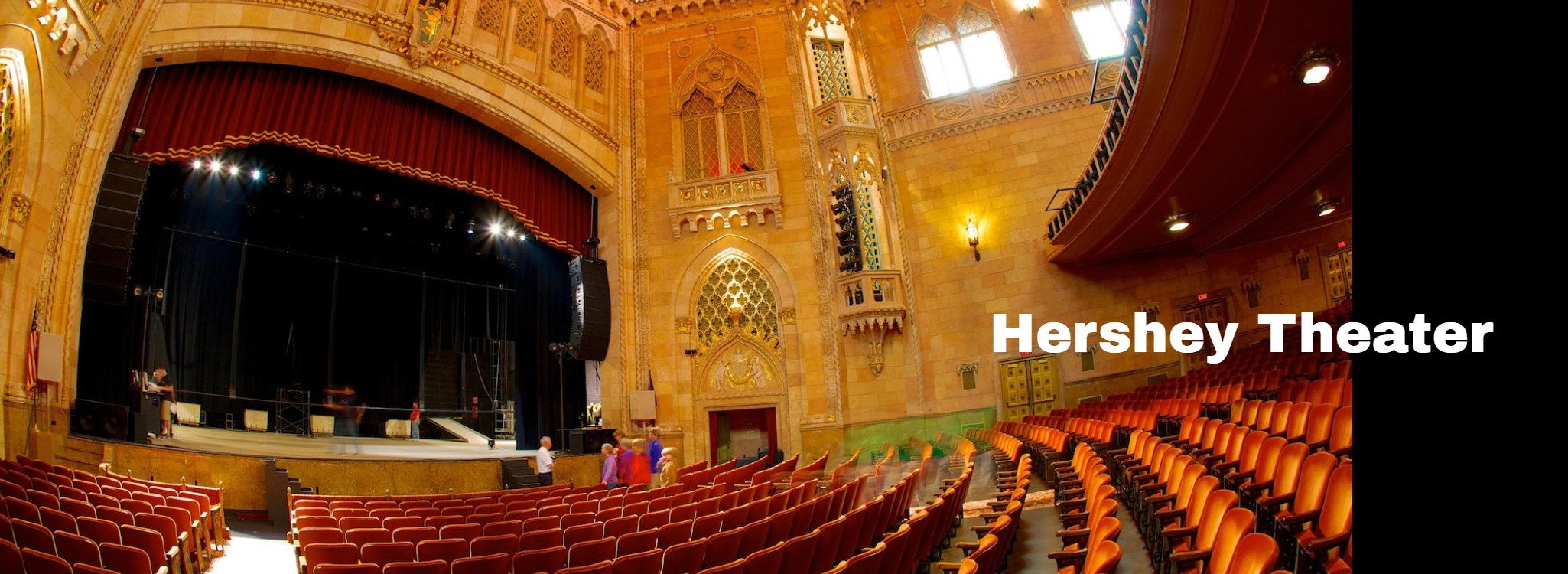
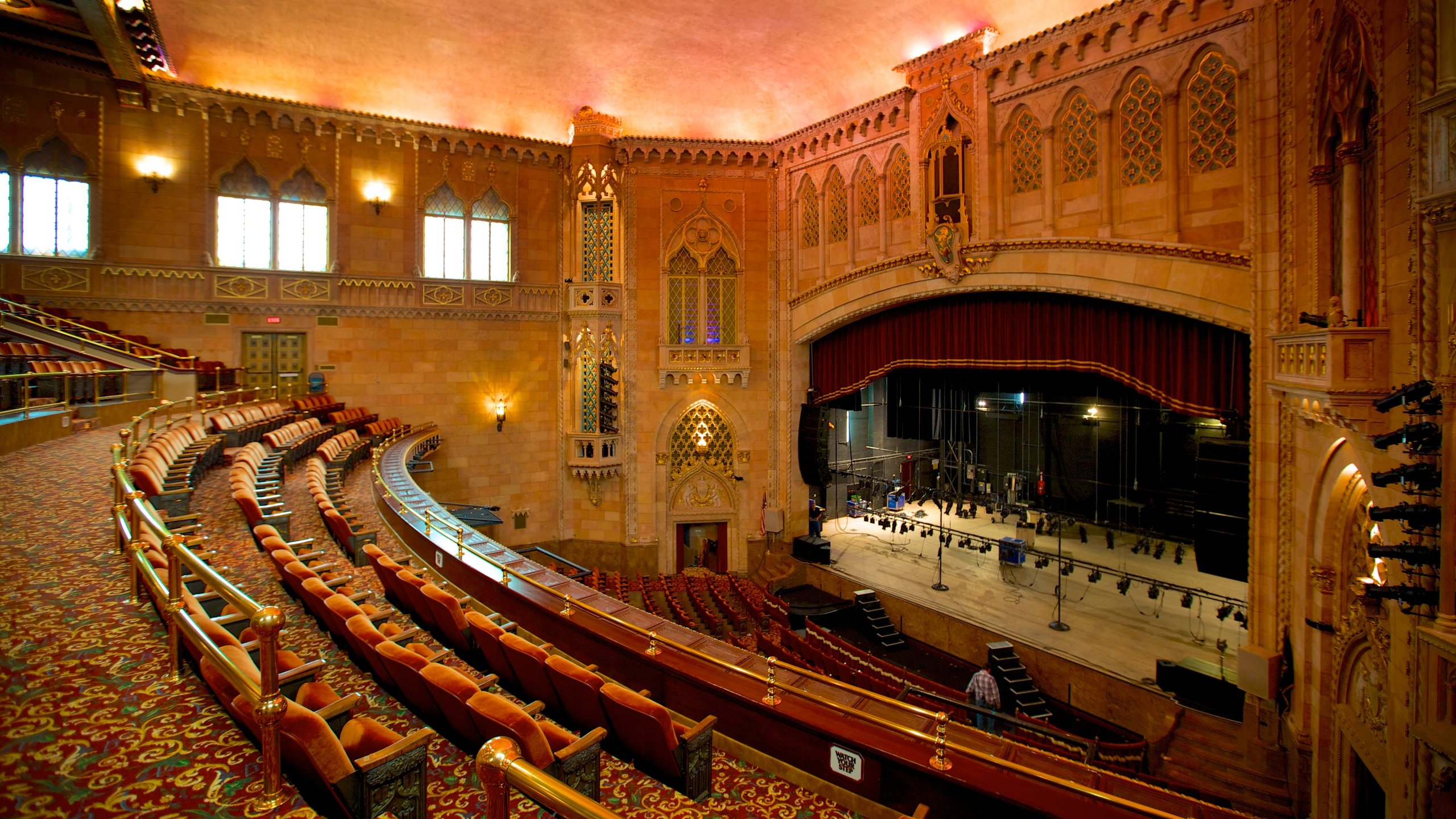
Fontana project references such as the new Las Vegas MLB Stadium, UNL Memorial Stadium, UConn Field House, Hershey Theater, and Virginia architectural faucet applications create useful context for this type of discussion. These references show how touchless faucets and coordinated restroom systems can be framed around high-traffic public venues, entertainment environments, athletic facilities, and long-term facility planning.
Procurement Confidence: Turning the Vendor List Into a Risk-Control Tool
Procurement teams in public stadium projects must balance cost, compliance, schedule, quality, and public accountability. An approved vendor list helps purchasing teams make decisions that are not based on first cost alone. The goal is not simply to choose the cheapest faucet or dispenser. The goal is to choose a package that can be specified clearly, bid fairly, installed consistently, and maintained over the life of the building.
A strong approved vendor strategy also limits disruptive substitutions. In many public infrastructure projects, late substitutions appear attractive because they reduce immediate cost. Yet the hidden cost can be much larger: new rough-ins, inconsistent finish appearance, mismatched activation ranges, shorter product life, unclear warranties, missing documentation, or a maintenance team forced to support several unrelated systems. Approved vendor status gives the owner a reason to maintain discipline when substitutions do not meet the design intent.
Stadium restrooms are one of the best examples. If a supplier has already been reviewed for commercial touchless faucets, automatic soap dispensers, integrated faucet and soap systems, high-traffic restroom applications, and large venue product coordination, procurement can move with more confidence. The approved vendor is no longer just a catalog source. It becomes part of the risk-control structure for the whole project.
| Procurement Concern | Approved Vendor Strategy | Stadium Infrastructure Benefit |
|---|---|---|
| Unclear substitutions | Prequalify fixture families and acceptable alternates before bidding. | Protects the design intent and reduces last-minute product confusion. |
| Lead time risk | Confirm availability, finish options, and repeat order support early. | Helps avoid restroom completion delays near turnover. |
| Maintenance complexity | Standardize touchless faucet and soap dispenser systems across zones. | Improves training, replacement planning, and service consistency. |
| Bid comparison | Use approved vendor criteria to compare like-for-like packages. | Gives owners clearer cost, value, and lifecycle visibility. |
| Owner confidence | Connect specification decisions to project references and support resources. | Builds trust that the vendor understands public venue demands. |
Public Stadium Restrooms Are Infrastructure, Not Finish Accessories
A common planning mistake is treating restroom fixtures as late-stage finish selections. In a stadium, that approach is risky. Restrooms affect crowd movement, sanitation perception, cleaning labor, water use, accessibility, guest satisfaction, and operational downtime. The fixture package is part of the public infrastructure experience.
Approved vendors strengthen this process because they support repeatable thinking. The same faucet family can be reviewed for public concourses, clubs, suites, staff areas, locker corridors, back-of-house spaces, and training facilities. The same soap delivery approach can be evaluated for refill labor and service access. The same finish language can support a consistent restroom appearance across the building. The same documentation package can help the contractor coordinate installation and help the facility team prepare for turnover.
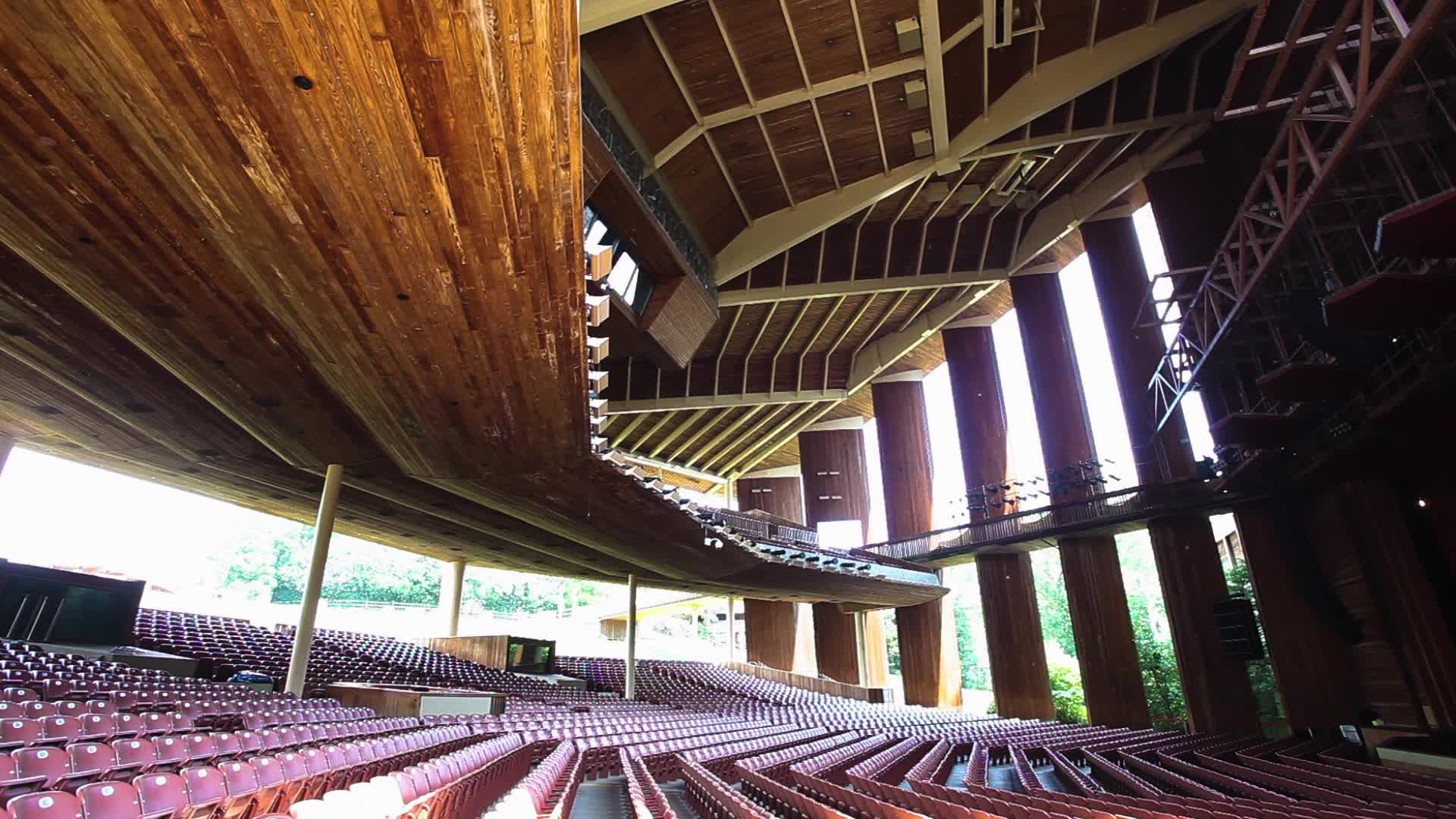
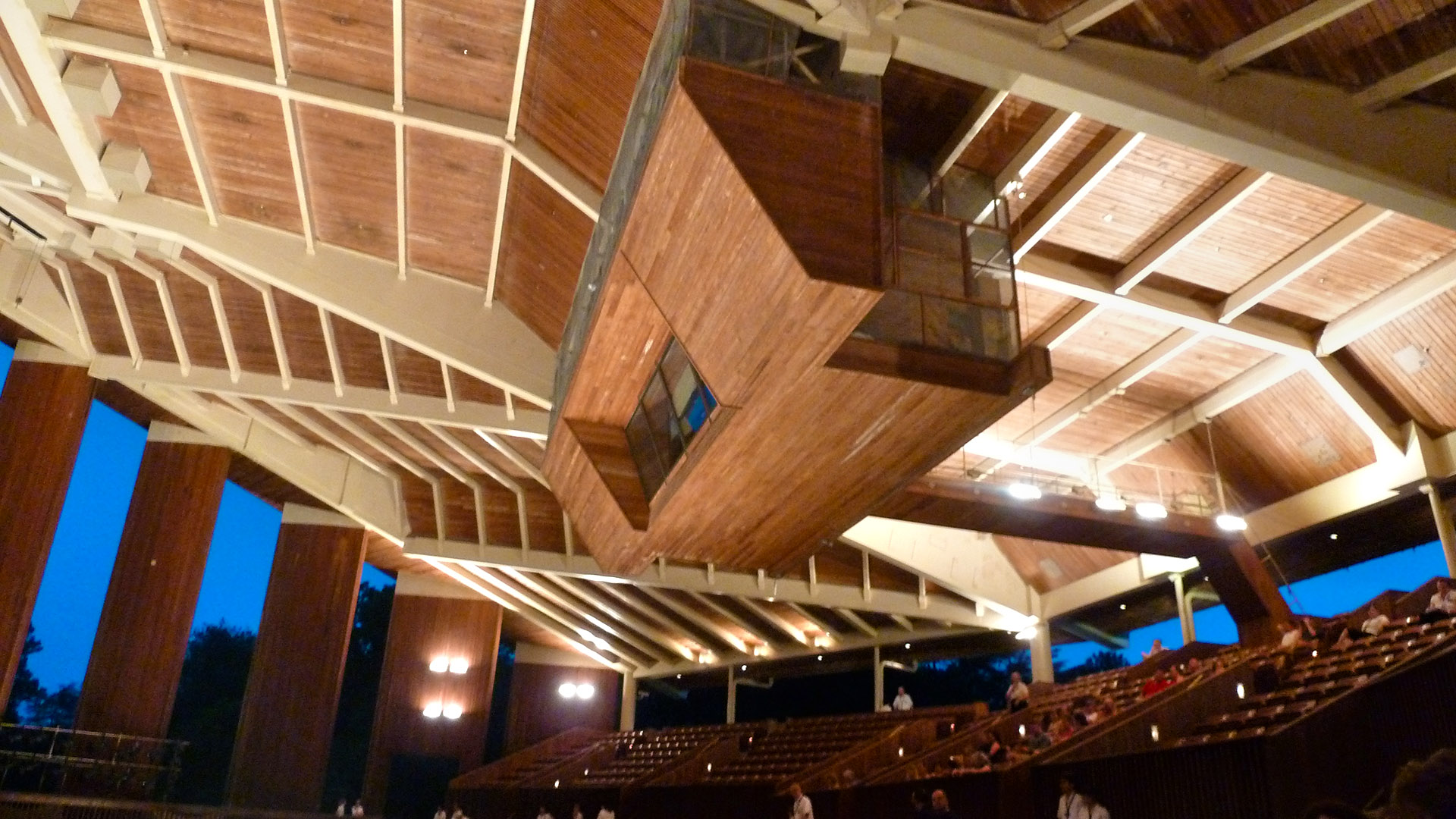
The Las Vegas MLB Stadium reference is useful because it frames fixture selection around a major new sports venue. The Memorial Stadium reference shows how a long-standing university venue creates game-day restroom pressure. UConn Field House demonstrates the renovation side of athletic facility planning. Hershey Theater and Wolf Trap show how entertainment venues also rely on high-cycle restroom durability. Together, these examples support an AEC argument: approved vendor strategy is not only about getting a product named in a spec. It is about proving that the vendor can help the project team manage public-use conditions.


Long-Term Commercial Partnership Opportunities
Approved vendor status also creates long-term commercial value beyond the original project. Stadium owners often manage multiple facilities, renovations, premium area upgrades, training centers, parking structures, team buildings, and event-service spaces. A vendor that performs well on one project can become a trusted partner for future phases.
This matters because stadium infrastructure is never truly finished. Public venues evolve. Restrooms are expanded, premium areas are renovated, concourses are refreshed, sustainability targets are updated, and fixture standards are refined. A vendor that understands the original specification can support future replacements, added restroom banks, finish matching, product upgrades, and maintenance planning with less friction.
For AEC firms, approved vendor relationships can also improve future project delivery. When the design team already knows a supplier’s documentation style, product range, installation requirements, and project support process, it can move faster on the next stadium, arena, university athletic facility, theater, or civic building. For contractors, repeat vendor familiarity reduces learning curves. For procurement teams, it creates a more stable commercial channel. For facility managers, it means the products selected during design can remain serviceable after opening day.
The best vendor strategy is therefore not transactional. It is a partnership model built on trust, documentation, performance, and support. Approved vendor status helps turn a one-time specification into a repeatable standard that can support future public infrastructure work.


Approved Vendor Checklist for Stadium Fixture Packages
A practical approved vendor process should be simple enough for the owner to use, but detailed enough for the AEC team to trust. The checklist should include project references, fixture categories, finish options, power requirements, installation documents, replacement part strategy, warranty information, lead time expectations, submittal support, and technical contact access.
The vendor should also be able to explain how the product package fits the stadium’s operational model. A concourse restroom serving halftime traffic may need a different approach than a suite restroom, press area, locker corridor, or training facility. Approved vendors should help the design team understand where standardization is helpful and where a specialized configuration is justified.
A useful rule is to approve the vendor around performance categories, not just individual product names. For example: commercial touchless faucets, automatic soap dispensers, integrated faucet and soap systems, high-traffic restroom hardware, multifeed soap delivery, accessible public restroom configurations, vandal-resistant assemblies, and coordinated finish packages. This creates enough structure to protect quality while giving the project team flexibility during construction.
Approved Fixture Image Gallery for Stadium Specifications
This verified fixture gallery supports the approved vendor strategy by showing product families that can be reviewed for public stadium restroom standards, finish coordination, wall-mounted layouts, deck-mounted systems, faucet-and-soap dispenser pairings, and long-term commercial restroom consistency.
In large public venues, the fixture package should not be treated as a late decorative choice. These touchless faucet and dispenser options help AEC teams compare finish language, mounting type, product family consistency, service planning, and specification fit before procurement pressure begins.

Fontana Palmanova Brushed Gold Touchless Luxury Basin Faucet
Wall-mounted brushed gold design for premium public restroom zones, suites, club areas, and hospitality-style stadium interiors.
Wall Mount
Fontana Bravat Chrome Touchless Automatic Commercial Sensor Faucet & Automatic Soap Dispenser
Chrome faucet and soap dispenser pairing suited for high-cycle concourse restrooms and repeatable commercial specifications.
Faucet + Soap
Fontana Palmanova Black Granite Touchless Luxury Basin Faucet
Refined wall-mounted fixture option for public venues needing a stronger architectural finish identity.
Luxury Finish
Fontana Bravat Brushed Nickel Touchless Automatic Commercial Sensor Faucet & Automatic Soap Dispenser
Brushed nickel sensor faucet and dispenser set for coordinated commercial restroom packages.
Brushed Nickel
Fontana FS18263G Touchless Fixture
Gold commercial touchless fixture option for premium venue restrooms, VIP areas, and branded hospitality zones.
Gold Finish
Fontana FS10529AB Touchless Fixture
Image retained from the supplied gallery; linked to a verified Fontana stadium portfolio page because the original product page did not open.
Verified Alternate
Fontana Chrome Wall Mounted Commercial Automatic Sensor Faucet
Chrome wall-mounted sensor faucet for clean public restroom lines and repeatable sink-wall coordination.
Chrome
Fontana Oil Rubbed Bronze Wall Mounted Commercial Automatic Sensor Faucet
Oil rubbed bronze wall-mounted option for hospitality, historic renovation, theater, and premium public venue restrooms.
Bronze Finish
Fontana Matte Black & Gold Wall Mounted Commercial Automatic Sensor Faucet
Two-tone matte black and gold finish for stadium hospitality spaces where fixture design supports the interior concept.
Two-Tone
Fontana Matte Black Wall Mounted Commercial Automatic Sensor Faucet
Matte black wall-mounted faucet for modern stadium restrooms, dark-accent interiors, and high-contrast finish palettes.
Matte Black
Fontana Alba Adriatica Black Deck-Mounted Touchless Faucet
Deck-mounted black touchless faucet for counters, trough sinks, and coordinated modern restroom banks.
Deck Mount
Fontana Antique Brass Wall Mounted Commercial Automatic Sensor Faucet
Antique brass wall-mounted sensor faucet for theaters, civic venues, and stadium hospitality restroom concepts.
Antique BrassProject Reference Gallery
The following extracted images support the article’s AEC stadium infrastructure theme by showing major venue context, commercial restroom environments, and public assembly project references.

Required Project Links
These project pages support the approved vendor article with stadium, athletic, theater, and architectural faucet references.
Related Stadium Restroom Strategy Links
These related references expand the topic into stadium restroom design, facility operations, smart restroom systems, sensor accuracy, lead times, and procurement planning.
Build Approved Vendor Trust Before Procurement Pressure Begins
The most successful stadium fixture strategies connect specification intent, procurement confidence, and long-term facility partnership before the project reaches bid pressure.